
The History of Juneteenth
From the origins of slavery in colonial America to General Order No. 3 in Galveston, Texas on June 19, 1865, through Reconstruction, more than a century of community observance, and the 2021 federal holiday designation.
June 19, 1865: What Happened in Galveston
The Civil War ended in April 1865 with the surrender of Confederate General Robert E. Lee at Appomattox Court House in Virginia. But the war's end did not immediately reach every part of the former Confederacy. Texas, the most remote Confederate state, had seen little direct military engagement and had no significant Union Army presence.
On June 19, 1865, Union Major General Gordon Granger arrived in Galveston, Texas with approximately 2,000 Union soldiers. From the balcony of Ashton Villa, Granger read General Order No. 3 to the assembled crowd.
General Order No. 3 - Headquarters, District of Texas, Galveston, June 19, 1865
"The people of Texas are informed that in accordance with a Proclamation from the Executive of the United States, all slaves are free. This involves an absolute equality of personal rights and rights of property between former masters and slaves, and the connection heretofore existing between them becomes that between employer and hired labor. The freedmen are advised to remain quietly at their present homes and work for wages. They are informed that they will not be allowed to collect at military posts; and that they will not be supported in idleness either there or elsewhere."Major General Gordon Granger, U.S. Army, Commanding
For approximately 250,000 enslaved people in Texas, this was the first time they had heard the news of their freedom. The Emancipation Proclamation had been signed two and a half years earlier, on January 1, 1863. But without Union soldiers to enforce it, the Proclamation had no practical effect in Texas.
The reaction to the announcement varied. Some enslavers had withheld the news of emancipation from the people they held in bondage, in some cases for months after the war ended. Others had moved enslaved people from other states to Texas specifically to avoid Union enforcement. For those who heard the order read on June 19, the news was both the fulfillment of a long-awaited promise and the beginning of an uncertain freedom.
One year later, in 1866, the first anniversary of June 19 was celebrated in Texas. Formerly enslaved people and their families gathered to mark the day with prayer, music, food, and reflection. The tradition of Juneteenth observance had begun.

How Juneteenth Became a National Tradition
In the decades following 1865, Black Americans moved from Texas and other Southern states to cities and communities across the country. They carried the tradition of Juneteenth observance with them. By the early 20th century, Juneteenth was being celebrated in communities far beyond Texas.
The observance took different forms in different communities. In some places it was a day of church services and prayer. In others it was a community gathering with music, food, and readings of the Emancipation Proclamation. In many communities it was both: a day of solemn reflection and joyful celebration.
During the Great Migration of the early and mid-20th century, when millions of Black Americans moved from the South to Northern and Western cities, Juneteenth observances spread further. The holiday was not always widely known outside Black communities, but within those communities it was preserved and passed down through generations.
Why Emancipation Parks Were Created
In the decades after emancipation, Black communities were frequently denied access to public parks and fairgrounds for Juneteenth celebrations. Rather than abandon the tradition, communities pooled their resources to purchase land specifically for the observance.
The first was Houston's Emancipation Park, a ten-acre lot purchased in 1872 by the Colored People's Festival and Emancipation Park Association, led by the Baptist minister and formerly enslaved Reverend Jack Yates. In 1898, Mexia's Nineteenth of June Organization purchased land on the Navasota River — now Booker T. Washington Park — said to draw up to 30,000 for the celebration. Austin's community purchased its own Emancipation Park a few years later, though the city of Austin later seized it to build housing. These parks were not just gathering places. They were acts of community self-determination.
Key Dates in the History of Juneteenth
Slavery Begins in English North America
The first enslaved Africans arrive in the English colony of Virginia. Over the following two centuries, the institution of slavery expands across the colonies and later the states, supported by law, commerce, and constitutional compromise.
Fugitive Slave Act
Congress passes the first Fugitive Slave Act, requiring free states to return escaped enslaved people to their enslavers. The law makes the entire nation legally complicit in the enforcement of slavery.
Fugitive Slave Act Strengthened
The Compromise of 1850 includes a stronger Fugitive Slave Act, requiring citizens to assist in the capture of escaped enslaved people and denying the accused the right to testify in their own defense.
Dred Scott v. Sandford
The U.S. Supreme Court rules that Black Americans, whether enslaved or free, are not citizens and have no right to sue in federal court. The decision declares the Missouri Compromise unconstitutional and extends the legal reach of slavery.
Emancipation Proclamation
President Lincoln issues the Emancipation Proclamation, declaring all enslaved people in Confederate states to be free. The Proclamation can only be enforced where the Union Army has a physical presence. In Texas, the most remote Confederate state, it remains unenforceable for more than two years.
Juneteenth
Union Major General Gordon Granger arrives in Galveston, Texas and reads General Order No. 3, announcing that all enslaved people are free. Approximately 250,000 enslaved people in Texas learn of their freedom for the first time. This day becomes Juneteenth.
First Juneteenth Anniversary
The first anniversary of June 19, 1865 is celebrated in Texas. Formerly enslaved people and their families gather to mark the day. The tradition of annual Juneteenth observance begins.
13th Amendment Ratified
The 13th Amendment to the U.S. Constitution is ratified, abolishing slavery throughout the United States. It applies to all states, including the border states that the Emancipation Proclamation had not reached.
14th Amendment Ratified
The 14th Amendment grants citizenship to all persons born or naturalized in the United States, directly overturning the Dred Scott decision. Its equal protection clause becomes the constitutional foundation for civil rights law.
Juneteenth Spreads Nationally
As Black Americans migrate from Texas to other states during and after Reconstruction, they carry the tradition of Juneteenth observance with them. Communities across the country begin celebrating June 19 as a day of freedom and reflection.
Texas Makes Juneteenth a State Holiday
Texas becomes the first state to officially recognize Juneteenth as a state holiday, 115 years after the events in Galveston. The legislation is signed by Governor William Clements.
Federal Holiday
President Biden signs the Juneteenth National Independence Day Act, making June 19 a federal holiday. The legislation recognizes the historical significance of the day and the more than 150 years of community observance that preceded federal recognition.
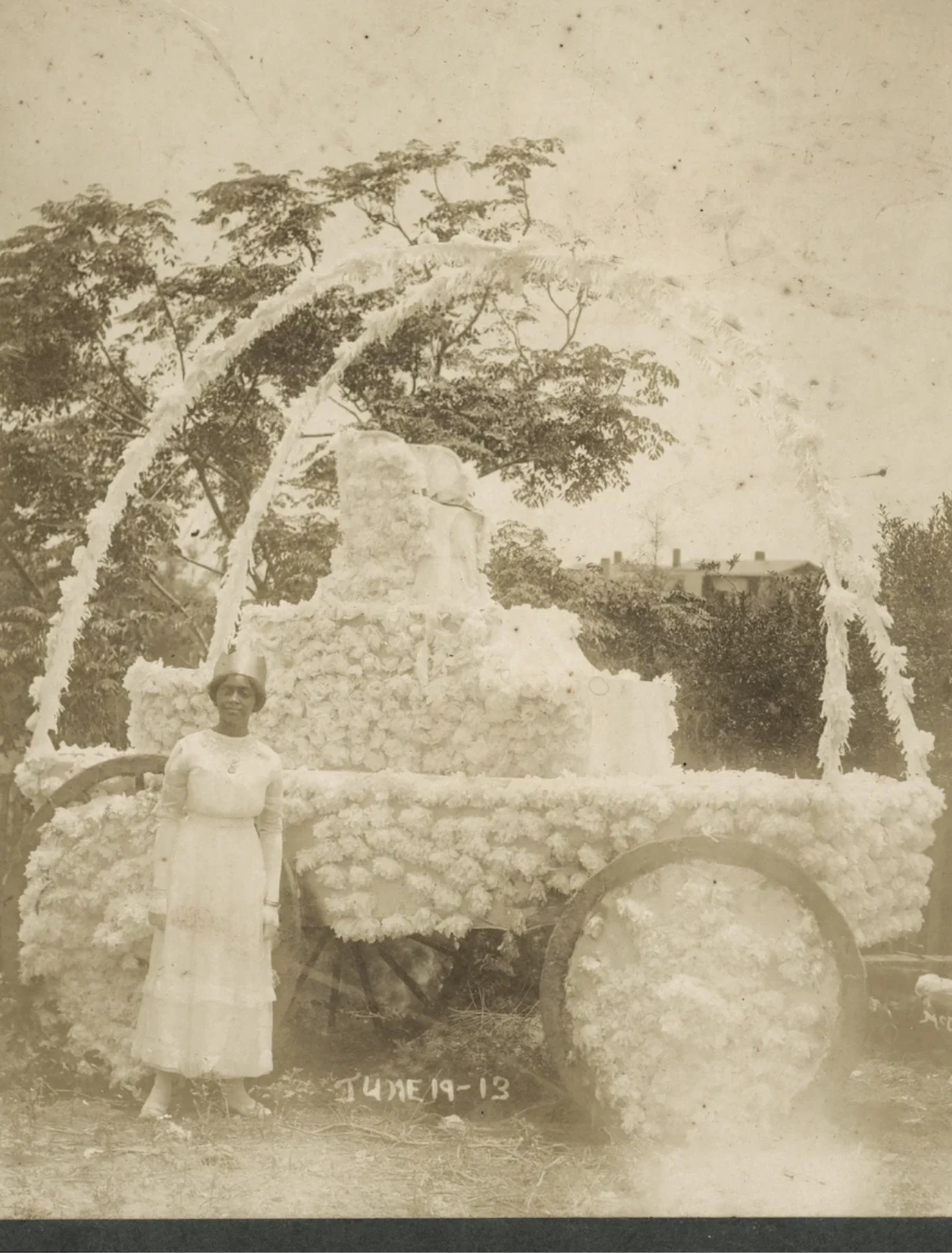
Early Photographs of Juneteenth
These photographs document Juneteenth celebrations from the late 19th and early 20th centuries. All images are in the public domain and are attributed to their original sources.


Juneteenth Becomes a Federal Holiday
On June 17, 2021, President Biden signed the Juneteenth National Independence Day Act into law, making June 19 a federal holiday. The legislation passed the Senate unanimously and the House by a vote of 415 to 14.
Federal recognition did not create Juneteenth. Communities had observed it since 1866, more than 155 years before the federal holiday was established. Texas had recognized it as a state holiday since 1980. By 2021, 47 states and the District of Columbia had some form of official recognition.
What federal recognition did was acknowledge what those communities had known for generations: that June 19, 1865 is one of the most significant dates in American history. The formal designation placed Juneteenth alongside Independence Day, Memorial Day, and other federal holidays as a day of national observance.
Juneteenth National Independence Day Act, 2021
"June 19th is now a federal holiday. Juneteenth marks both the long, hard night of slavery and subjugation, and a promise of a brighter morning to come. This is a day of profound weight and profound power."President Joseph R. Biden, June 17, 2021
Continue Exploring
Learn about the legal history, Pennsylvania's recognition story, or find upcoming events.